













Air Quality on Trains, Planes, and Public Transit: Why Filtration is Essential for Safe Travel
Air quality in public transportation has always been a concern, but it has taken on new importance in light of respiratory health threats like COVID-19A disease caused by the SARS-CoV-2 virus, leading to respiratory illness. and the seasonal spread of colds and flu. Whether we travel on trains, planes, subways, or buses, we spend time in shared, enclosed spaces where ventilationThe process of circulating air to improve indoor air quality., filtrationThe process of removing particles from the air or liquids using filters., crowding, and trip duration all affect exposure risk. Air quality in these spaces has a direct impact on health, making effective ventilationThe process of circulating air to improve indoor air quality. and filtrationThe process of removing particles from the air or liquids using filters. systems more important than ever.
In this article, we’ll explore the state of air quality across different modes of public transportation, why filtrationThe process of removing particles from the air or liquids using filters. is necessary, and what measures are needed to make traveling as safe and healthy as possible.
The Challenge of Air Quality in Public Transportation
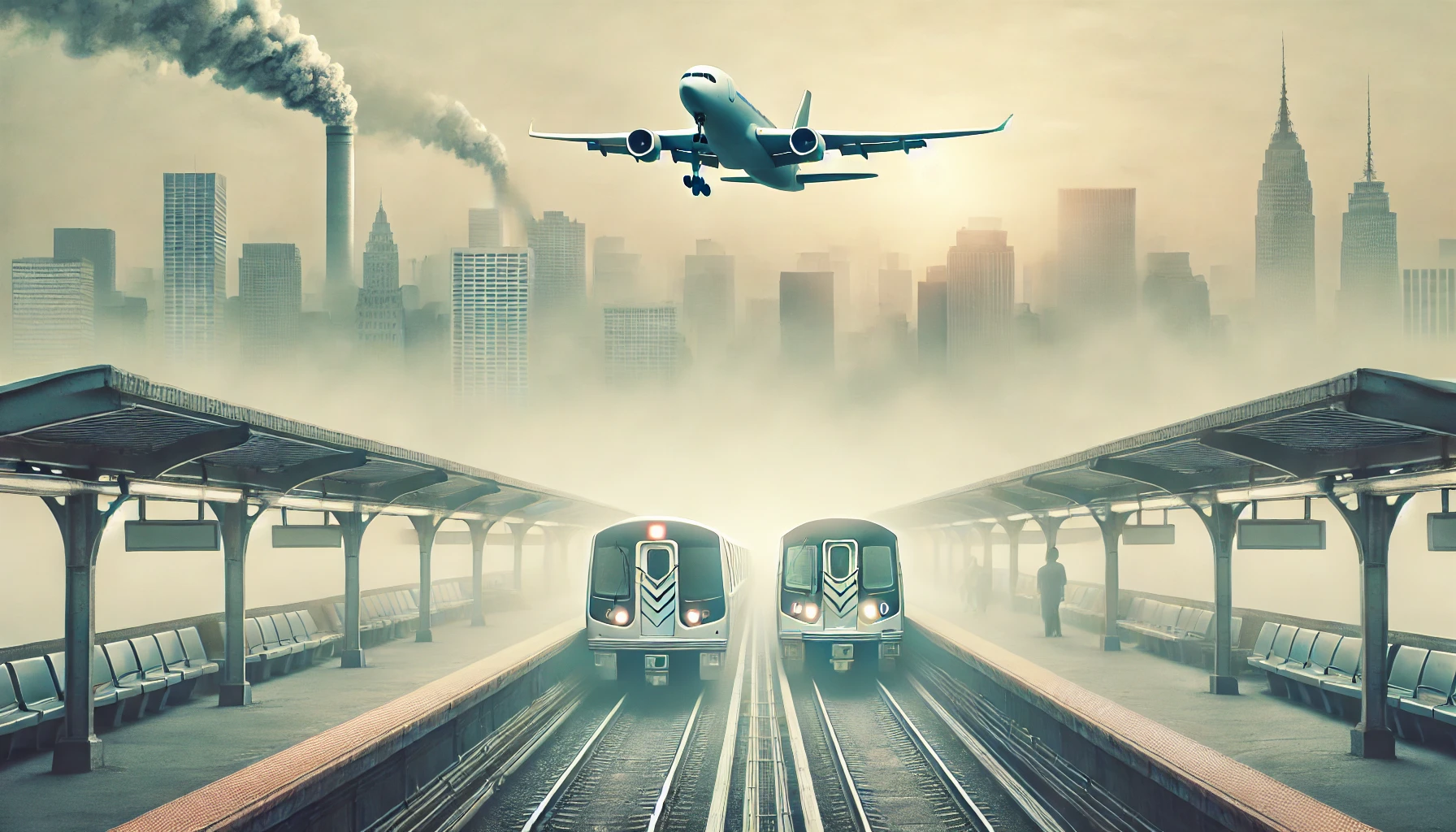
Public transportation presents a unique challenge when it comes to maintaining good air quality. Large numbers of people are in close quarters, which increases the concentration of respiratory particles, dust, and other pollutants. While fresh air and ventilationThe process of circulating air to improve indoor air quality. systems are essential, they’re not always sufficient on their own, especially in heavily trafficked and densely packed spaces. Here’s a closer look at air quality concerns on specific types of transportation:
- Planes: Commercial aircraft cabins usually use a mix of outside air and recirculated air, with recirculated air passing through HEPA filters on most U.S. commercial airplanes. That filtrationThe process of removing particles from the air or liquids using filters. is strong for particles, but close seating, boarding, deplaning, airport time, and prolonged exposure mean filtrationThe process of removing particles from the air or liquids using filters. alone cannot eliminate airborne transmissionThe spread of pathogens through aerosols or droplets suspended in the air. risk. 1FAA states that most large transport-category aircraft ventilationThe process of circulating air to improve indoor air quality. systems provide a mix of outside air and recirculated air, and that most U.S. commercial airplanes use HEPA filters in recirculated airflow that remove 99.97% of particulate material. FAA, “Cabin Air Quality,” https://www.faa.gov/newsroom/cabin-air-quality-0.
- Trains: Train ventilationThe process of circulating air to improve indoor air quality. and filtrationThe process of removing particles from the air or liquids using filters. standards vary widely by operator, train age, route, and region. Some systems may use stronger filtrationThe process of removing particles from the air or liquids using filters. or higher outdoor-air exchange, while others rely on less protective systems, making transparent standards and regular maintenance important.
- Subways: Subways pose one of the most challenging environments for air quality. Subway stations and cars are often underground with limited airflow, and subway tunnels can accumulate particulate matter from brakes, rails, wheels, and resuspended dust. Research in New York City has found substantially higher PM2.5 levels on underground subway platforms than at aboveground stations. 2A New York City subway study found much higher PM2.5 concentrations on underground platforms than at aboveground stations, with underground-platform means reported at 142 +/- 69 micrograms per cubic meter versus 29 +/- 20 micrograms per cubic meter aboveground. Luglio et al., “Particulate matter concentration and composition in the New York City subway system,” Atmospheric Pollution Research, https://doi.org/10.1016/j.apr.2023.101767.
- Buses: Buses generally have limited ventilationThe process of circulating air to improve indoor air quality. systems, often relying on open windows and basic air filters that don’t filter small particles effectively. On crowded buses, especially in cities, airborne particles, pollutants, and respiratory dropletsLarger droplets expelled when coughing, sneezing, or speaking. can remain suspended, increasing the potential for airborne transmissionThe spread of pathogens through aerosols or droplets suspended in the air..
The Need for Filtration in Public Transportation
FiltrationThe process of removing particles from the air or liquids using filters. is crucial for maintaining clean airAir free of pollutants, including viruses, bacteria, and harmful particles. in confined spaces, especially in high-traffic public transportation. Here’s why:
1. Reducing Pathogens and Airborne Illness Transmission
Public transportation can be one setting where people are exposed to respiratory infections. HEPA filters and compatible MERV-13 filters can reduce airborne particles, including particles that may carry infectious agents, but they work best with adequate airflow, ventilationThe process of circulating air to improve indoor air quality., source control, and maintenance. 3CDC/NIOSH recommends improving air cleanliness through measures such as upgrading central HVAC filtrationThe process of removing particles from the air or liquids using filters. to MERV-13 or better when compatible, using HEPA systems where appropriate, and considering germicidal ultraviolet air treatment in properly designed systems. CDC/NIOSH, “Improving Air Cleanliness,” https://www.cdc.gov/niosh/ventilation/prevention/air-cleanliness.html.
For instance, during the COVID-19A disease caused by the SARS-CoV-2 virus, leading to respiratory illness. pandemicA global outbreak of a disease., airlines emphasized their use of HEPA filters to reassure travelers of safer air quality. Studies have shown that HEPA filters can reduce the risk of airborne virus transmission, but they work best when combined with sufficient airflow and appropriate distancing,two factors that can be limited on public transit.
2. Reducing Particulate Matter and Pollutants
Air quality on subways, trains, and buses can be compromised by pollutants such as particulate matter (PM2.5 and PM10), which comes from sources like brake dust, diesel emissions, and even particles stirred up by foot traffic. Particulate matter is known to cause respiratory and cardiovascular issues, and the confined nature of public transit makes it easier for passengers to inhale these pollutants.
4WHO identifies PM2.5, ozone, nitrogen dioxide, sulfur dioxide, and carbon monoxide as major outdoor air pollutants, and links fine particulate matter exposure to cardiovascular and respiratory disease and cancers. WHO, “Ambient (outdoor) air pollution,” https://www.who.int/news-room/fact-sheets/detail/ambient-(outdoor)-air-quality-and-health.
Using filtrationThe process of removing particles from the air or liquids using filters. systems that target fine particulate matter can reduce passengers’ exposure to harmful pollutants. This is especially important in densely populated cities, where air pollution is already a concern and public transportation is a lifeline for commuting.
3. Addressing Allergens and Irritants
Public transit systems, especially those with older infrastructure, can harbor allergens like dust mites, mold spores, and pet dander. Without effective filtrationThe process of removing particles from the air or liquids using filters., these allergens can accumulate in the air, causing discomfort for passengers with asthma, allergies, or other respiratory sensitivities. Using filters that trap these particles can make public transportation safer and more comfortable for all passengers, particularly those with health vulnerabilities.
Filtration Standards for Different Types of Public Transit
FiltrationThe process of removing particles from the air or liquids using filters. standards and practices vary widely across modes of public transportation, with some adopting advanced technologies and others lagging behind. Here’s a look at where each mode stands:
- Planes: Many commercial planes use HEPA filters in the recirculated airflow while also bringing in outside air. This is a strong filtrationThe process of removing particles from the air or liquids using filters. baseline for aircraft cabins, though it should still be understood as one layer of protection rather than a guarantee of zero exposure. 5FAA states that most large transport-category aircraft ventilationThe process of circulating air to improve indoor air quality. systems provide a mix of outside air and recirculated air, and that most U.S. commercial airplanes use HEPA filters in recirculated airflow that remove 99.97% of particulate material. FAA, “Cabin Air Quality,” https://www.faa.gov/newsroom/cabin-air-quality-0.
- Trains: Train ventilationThe process of circulating air to improve indoor air quality. and filtrationThe process of removing particles from the air or liquids using filters. standards vary widely by operator, train age, route, and region. Some systems may use stronger filtrationThe process of removing particles from the air or liquids using filters. or higher outdoor-air exchange, while others rely on less protective systems, making transparent standards and regular maintenance important.
- Subways: Subway systems generally face greater challenges in providing effective filtrationThe process of removing particles from the air or liquids using filters. due to their underground locations, older infrastructure, and high density of passengers. In some cities, authorities have implemented advanced air purification systems in subway stations and cars, but the effectivenessThe real-world impact of a treatment or intervention. is often limited by air quality within the tunnels. For example, New York City and London have both faced scrutiny over subway air quality, with researchers finding high levels of particulate matter on underground platforms.
- Buses: Bus ventilationThe process of circulating air to improve indoor air quality. and filtrationThe process of removing particles from the air or liquids using filters. vary by fleet, vehicle age, outdoor air quality, passenger load, and whether windows or mechanical ventilationThe process of circulating air to improve indoor air quality. are used. Higher-efficiency filtrationThe process of removing particles from the air or liquids using filters., adequate outdoor air, and maintenance can reduce particle exposure, but operator-specific standards matter.
What Can Be Done to Improve Air Quality on Public Transit?
There is no one-size-fits-all solution for improving air quality across all forms of public transit, but here are some promising approaches:
1. Upgrade Filtration Systems
Using high-efficiency filters like HEPA or MERV-13 on trains, subways, and buses would greatly improve air quality. These filters can capture a wide range of particles, including fine particulate matter, allergens, and pathogens. Though implementing HEPA filtrationThe process of removing particles from the air or liquids using filters. across all modes of transit could be costly, it would be an investment in public health, reducing respiratory issues and potentially lowering healthcare costs associated with poor air quality.
2. Improve Ventilation and Fresh Air Intake
Increasing the intake of fresh air can help dilute pollutants and reduce the concentration of airborne particles. This approach is already used in airplanes, which bring in fresh air from outside, but it could be more widely adopted in buses, trains, and subways. Automated systems that regulate airflow and adapt based on passenger density can also improve air quality by adjusting ventilationThe process of circulating air to improve indoor air quality. as needed.
6CDC/NIOSH explains that ventilationThe process of circulating air to improve indoor air quality., filtrationThe process of removing particles from the air or liquids using filters., and air cleaning can provide air changes or equivalent air changes per hour, and recommends aiming for 5 or more air changes per hour where possible as a rough guide for reducing viral particles in workplace air. CDC/NIOSH, “How Much VentilationThe process of circulating air to improve indoor air quality. Is Enough?,” https://www.cdc.gov/niosh/ventilation/prevention/aim-for-5.html.
3. Use UV-C Light and Ionization
Some transit systems are exploring supplemental air-cleaning technologies, including properly designed UV-C or germicidal ultraviolet systems inside ventilationThe process of circulating air to improve indoor air quality. equipment. Ionization and other electronic air-cleaning technologies should be evaluated cautiously because some can generate ozone or other byproducts if poorly designed, installed, or maintained. 7CDC/NIOSH lists germicidal ultraviolet air treatment as a possible air-cleaning method when designed and installed appropriately, while EPA cautions that ozone-generating air cleaners and some electronic air-cleaning technologies can create harmful byproducts. CDC/NIOSH, “Improving Air Cleanliness,” https://www.cdc.gov/niosh/ventilation/prevention/air-cleanliness.html; EPA, “Air Cleaners and Air Filters in the Home,” https://www.epa.gov/indoor-air-quality-iaq/air-cleaners-and-air-filters-home.
4. Regular Maintenance and Filter Replacement
Even the best filtrationThe process of removing particles from the air or liquids using filters. system won’t work well without regular maintenance. Public transportation systems should follow stringent maintenance schedules, regularly cleaning ventilationThe process of circulating air to improve indoor air quality. systems and replacing filters. Keeping air systems clean ensures that filtrationThe process of removing particles from the air or liquids using filters. remains effective, reducing the risk of pollutants accumulating in ducts and vents.
Final Thoughts: The Need for Better Air Quality on Public Transit
With millions of people relying on public transportation daily, the need for effective air filtrationThe process of removing particles from the air or liquids using filters. and clean airAir free of pollutants, including viruses, bacteria, and harmful particles. standards has never been more critical. Better air quality on trains, planes, buses, and subways not only makes travel safer and more comfortable but also protects public health, reducing the spread of airborne illnesses and exposure to pollutants.
As we continue to adapt to changing public health needs, investing in filtrationThe process of removing particles from the air or liquids using filters. and ventilationThe process of circulating air to improve indoor air quality. on public transit can improve the quality of life for everyone. Clean airAir free of pollutants, including viruses, bacteria, and harmful particles. shouldn’t be a luxury,it’s a necessity, especially in the confined spaces of public transportation. By prioritizing air quality improvements, we can make transit a healthier option for all.
